Health Information, Natural Healthy Way, Nutrition, and Healthy Lifestyle

How to Maintain Strong Erections Naturally - Healthy Sex

Do you want to transform your sex life from something that gives you worry what you crave confidence? Want to know that you can be a challenge whenever arises? I want to know that he will be able to provide your partner's sexual forever? - https://plantsforhelath.blogspot.com

Beautiful Tips with Javanese Traditional Cosmetics

The Natural Beauty of Women. Javanese woman very much attention to physical appearance are always slim, attractive and beautiful with bright smiles. - https://plantsforhelath.blogspot.com

Starting Tips of Yoga

Yoga is not the parents but also a growing number of fans of Yoga for teens. Not surprisingly, the sport that focuses on physical flexibility, spirituality and sobriety already completed once. - https://plantsforhelath.blogspot.com

7 Plants That Purify Indoor Air

Good news: you have a cheap, easy, green tool at your disposal to help get rid of formaldehyde. Add these seven houseplants that NASA scientists discovered formaldehyde removal instructions and Air Purifier for your home for a more secure and cleaner. - https://plantsforhelath.blogspot.com

Benefits of Avocado for Beauty and Pregnancy

Avoocado fruit and leaves contain saponins and alkaloids walflavonoidat and tannins. Avocados also contain beta carotene and chlorophyll and vitamin E and vitamin b complex which is abundant in Avocados. Avocado is also rich in minerals, and are useful for regulating body functions and stimulate growth, fiber helps digestion at one time. - https://plantsforhelath.blogspot.com

Showing posts with label Skin Cancer. Show all posts

Sunday, 11 November 2018

Author Naddin Rosyda
Does Skin Cancer Genetic Family History?

deadly genetic


Does Skin Cancer Illness Descendants In The Family?

Cancer is one of the most common health problems threatening. One cause is genetic factors or breeds. Yes, when there is one of the family members affected by cancer, you may be at risk for developing cancer. However, whether this also applies to the skin cancer melanoma? The following explanation.

A glimpse of skin cancer melanoma

Cancer occurs when normal cells in the body develop abnormal and uncontrolled. Well, it can also occur in skin cells.

Melanoma is a type of skin cancer that arises when cells melanocytes (pigment-producing cells) grow in abnormal become cancerous. It is characterized by the appearance of moles cancer traits of unexpectedly, usually colored Brown or darker than the surrounding skin tone.

Although quite rare, skin cancer melanoma can spread more quickly and cause serious problems in other organs. Good on women or men, melanoma most often appear in the neck, face, chest, back, even in the parts of the eye (ocular melanoma).

The main cause of the rise of melanoma is excessive exposure to sunlight on the skin. However, it is also determined by the type of the skin of any person. Risk factors for skin cancer melanoma will be increased in people who are fair skinned and has the original light-colored hair. This is why, more skin cancer found in offspring of whites (ras kaukasian).

So, does melanoma skin cancer can be derived in the family?

Offered from Very well, experts still continue to investigate the influence of events from family gene melanoma. So far, they reveal that genetic factors accounted for only one percent of all cases of melanoma.

There are three genes that are known to have an affinity with the skin cancer melanoma, among them the following:

  • CDKN2A: Gene CDKN2A is the most common cause of hereditary melanoma skin cancers in the family. This gene cause familial atypical mole syndrome-melanoma (FAM-M) or cancer melanoma derivative. However, not all cases of melanoma are caused by mutations of the gene CDKN2A.
  • MC1R: Numerous studies have proven that the gene MC1R (melanocortin-1 receptor) can increase the risk of melanoma. This is the gene that causes a person has red hair, brightly colored skin, and the skin is sensitive to ultraviolet light radiation (UV).
  • MDM2: MDM2 Gene function to determine how much cell division due to cancer. MDM2 Gene mutations more found in people with skin cancer melanoma women age 50 years and under. In fact, this one gene mutation has a greater likelihood for developing melanoma than sun exposure.


Thus, it can be concluded that melanoma can be caused by hereditary factors that have genes cause melanoma. This certainly cannot be prevented by any means, except with the treatment as soon as possible.

Should genetic tests to find out the melanoma cancer risk?

After learning one of the family members affected by melanoma, you certainly do not want to be exposed to the same diseases and instantly search for prevention efforts. For starters, you might wonder whether you need a genetic test or not.

Genetic tests serve to find out how big change genes in the body that can increase the risk of certain diseases, including melanoma. A genetic test for melanoma is highly recommended when you:

  • Have three or more cancer melanoma that grow on the surface of the skin
  • Have a lot of suspicious moles; the shape is irregular, dark brown or black
  • Have two or more family members who suffered from melanoma or pancreatic cancer

Genetic test results positive melanoma can help doctors monitor the development of skin cancer in your body. High-risk patients affected by melanoma naturally need more skin examination to ensure the diagnosis.

However, when the test results are negative, you are then able to feel free from melanoma. To reduce the risk of skin cancer melanoma, protect your skin from excessive sun exposure and skin health screening done at regular intervals.


Saturday, 20 October 2018

Author Naddin Rosyda
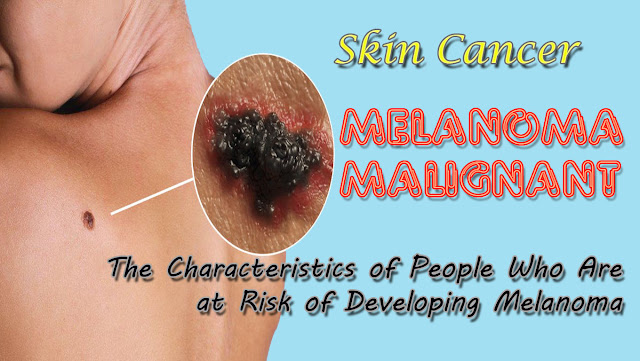
The Characteristics of People Who Are at Risk of Developing Melanoma

Melanoma Malignant


What is melanoma? Melanoma is a type of cancer of the skin, which is very dangerous. These diseases strike women vulnerable with age under 30 years of age, whereas in men by age 50 or over.

The Cause Of Melanoma
Many risk factors for melanoma has been found, but it is not always clear how melanoma can cause cancer. For example, most moles never turn into cancer melanoma Mole, but also who can do it.

The researchers have found some changes in genes in the cells of a Mole can cause them to become melanoma cells. But it is still not known for sure why some become cancerous moles while most do not.

Melanoma cancer can be caused by DNA changes that turn on or turn off a gene suppressor oncogenes tumors. Changes in several different genes usually needed for the cell to become a cancer cell.

Please note, cancer melanoma may not necessarily be attacking someone for granted. This is because there are some people who are more risky traits affected by this disease. What are the symptoms of melanoma? These include:

1. Have a History of Skin Cancer
As with other types of cancer that could be attacked based on heredity, skin cancer melanoma also can strike someone who have a history of skin cancer in the family.

If you have a family that never suffered the kind of disease, may we suggest you get yourself checked as early as possible so that you can avoid disease melanoma.

2. Have a Bright Skin and Hair
Don't worry if you have Tan skin color is ripe or not. This is because the risk of developing the disease melanoma is much smaller. The disease is most likely of attacking someone who has skin and hair color, for example just like those of Europe, America, and Australia.


This is because someone who has skin tone brighter and has spots on the skin has melanin pigment which turns out to be less than those who are dark-skinned. The pigment serves to protect the skin from ultraviolet rays.

3. The Mole
Most people have moles and maybe it's reasonable if the shape is unusual. However, the mole could also serve as a sign that an individual may be exposed to disease melanoma.

If you have a Mole with the color that fairly weird, itching, bleeding, scaly, and large-sized, you should immediately check with your doctor because it can be a sign of cancer melanoma.

4. Have a Habit of Sunbathing
Sunlight is indeed healthy, then it is no wonder many people who love the Sun to get a darker skin color. But if the skin is constantly exposed to sunlight directly, it can be very dangerous.

This is because exposure to sunlight can directly trigger the risk of skin cancer. Therefore, stop the habit of basking too long so that you are free from the risk of melanoma cancer.

Ultraviolet light (UV) is the main cause of melanoma. UV rays can damage DNA in the skin cells. Sometimes this damage affecting a particular gene that controls how the skin cells grow and divide. If these genes do not function properly again, the affected cells may become cancer cells.

The characteristics of other melanoma cancer is:
  • A sore that does not heal.
  • Spread of pigment of the boundary area to the surrounding skin.
  • Redness or swelling recently outside the border of a mole.
  • Changes in sensations, such as itching, mushy, or pain.
  • Changes in the surface of the mole – flaky, moist, bloody, or the appearance of lumps.

Often times you will be difficult to distinguish between ordinary mole and melanoma, it is therefore important for you to consult a skin specialist or a plastic surgeon to determine if you are suffering from melanoma cancer or not.

Friday, 31 August 2018

Author Naddin Rosyda
Melanoma Malignant : Understanding, Diagnosis, Treatment and Prevention

Melanoma Maligna


Melanoma Malignant. Skin cancer melanoma is a type of cancer that develops in the melanocytes, the pigment cells of the skin that serves as producing melanin. This serves melanin absorbs ultraviolet rays and protects the skin from damage. Maligna Melanoma is a type of skin cancer that is rare and extremely dangerous. This condition begins from human skin and can spread to other organs in the body. The emergence of new moles or changes in existing moles usually become public sign or melanoma symptoms. This could happen in the rest of the body, but some parts of the body that often have appearances are:
  • Face
  • Hand
  • The back
  • Leg

Melanoma has a irregular shape and more than one color. Moles are afflicted by melanoma can itch and may bleed, moreover, its size can also exceed the normal moles. To distinguish between the normal moles and melanoma.

Melanoma Malignant Sufferers


According to the WHO data, there are about 132,000 melanoma cases appear every year around the world. Each of the 3 cases of cancer found one case of melanoma skin cancer and it is estimated this will continue to increase because of the ozone layer in the sky that keeps thinning. A 10 percent reduction in the ozone layer alone can lead to increased incidence of melanoma skin cancer additional 4500 new cases.

The risk of melanoma is greater strike women aged under 40 years of age. This type of skin cancer can be fatal if not diagnosed in the beginning.

Causes Of Skin Cancer Melanoma Malignant

Melanoma occurs when the skin's pigment cells develop abnormally. Up to now, is not yet known why this occurs. Some people who believed the cause of the rise of melanoma due to skin that is too often exposed to ultraviolet light (UV) natural or artificial. But it turns out that not all people are often exposed to UV being sufferers of melanoma. Researchers are still working to find out the cause. Some factors that are known to be able to increase the chances of contracting melanoma is to have lots of moles or freckles on the skin, pale-skinned and burn easily, have a family member who suffered from melanoma, as well as the red haired or blonde.

Malignant Melanoma Diagnosis

Doctors can diagnose maligna melanoma after doing a physical examination. The doctor will refer you to a specialist skin (Dermatology) or plastic surgeon if they think that you are suffering from melanoma. So if you notice any changes in the shape of a mole, soon encountered the doctor.

In most cases, a network of moles that are considered suspicious will be removed by surgery and studied whether cancer has become. This process is known by the term biopsy. As for checking whether the melanoma had already spread to other parts of the body node biopsy procedure, sentinel can also be done.

Malignant Melanoma Treatment


One of the main procedures of treatment of melanoma is surgery, although all types of handling done hanging with your condition. The operation can succeed if the melanoma undiagnosed in initial stages. But, to prevent melanoma appears again, you should undergo follow-up treatments. If melanoma is not undiagnosed until in the most severe, treatment that is done can only slow down the spread of cancer and relieve symptoms that occur. At this stage, it is usually needed medicines, such as chemotherapy.

Reappearance of Melanoma

There is the possibility of melanoma will come back if you have ever suffered from melanoma. If the cancer has already spread and worse, then your risk exposed back will increase.

You might have to do regular checks to monitor health, especially if the team handling your cancer feels that there is a likely melanoma will resurface. How to check if there are tumors in the skin and lymph glands, You will usually be taught by a team of doctors on duty.

Malignant Melanoma Prevention

You can lower your risk of developing melanoma skin exposed so as not to avoid direct exposure to ultraviolet light, whether natural or artificial, although the occurrence of melanoma is not always preventable. One of prevention of melanoma which is easy to do is to use sunscreen and wear clothes that are equipped to protect skin from the damaging sun exposure.

To increase the success of treatment and in order to be able to get a diagnosis from the beginning, You are advised to check moles and spots on a regular basis. Hopefully useful....


Saturday, 24 October 2015

Author Naddin Rosyda
Beware of Cancer Risk In Mole

Melanoma Maligna

Melanoma Malignant. Moles can actually be a sweetener someone's face, sometimes associated with a person's character corresponding location.

However please note, moles can develop into cancer. Mole malignancy of cancer is called melanoma malignant. In women, melanoma likely to appear on the arms and legs, whereas men are more numerous in the back of the body. This disease can occur if there is a recurring irritation in moles.

International Agency for Research on Cancer has focused research on moles that grow on the skin. A clinic in London has used a tool to facilitate detection molecatching mole.


More recently, King's College London reported that at least 100 people with melanoma are at risk of developing cancer. While in the UK, at least 1,500 people died from skin disease and about 132,000 people affected by cases of melanoma each year.

To that end, it is necessary to watch out if your moles show symptoms of changes that lead to malignancy. Symptoms in question, namely:

1. The size is getting bigger
2. The color darkening
3. Experiencing inflammation
4. There is a change of color such as spots
5. Experiencing bleeding
6. Experiencing Sores
7. Itching
8. Pain

If there are signs above, you should immediately consult a doctor. Moles can be diagnosed by biopsy or analysis of a mole, the examination in the laboratory to ensure the presence of cancer cells or not.

If the cancer has not spread, moles can be taken simply through minor surgery. But if it spreads, required surgery and chemotherapy or radiation. The earlier assess changes in moles become malignant, the higher the recovery rate.

Meanwhile, several things can be done to prevent cancer in moles, namely:


First, avoid skin exposed to the sun between 10:00 until 16:00. If out of the house at that hour, do not forget to use sunscreen (cream UV protection) to protect the skin from ultraviolet light or avoid the adverse effects of the sun.

Second, immediately check your moles to a dermatologist or surgeon if there is a change as above. Keep in mind, the mole cancer is rare in young children or the black.